Why Are EV Chargers Failing More Often Than Expected?
Discover why combining Power Quality Analysis with Thermal Imaging is becoming essential for maintaining safe, efficient and reliable EV chargers infrastructure.
The Problem Isn’t Always the Charger—It’s Often the Electrical System Behind It.
India’s EV ecosystem is growing at an unprecedented pace, with charging stations becoming a common sight in commercial buildings, highways, industrial facilities and residential complexes. But as adoption increases, so do reports of chargers tripping unexpectedly, overheating, charging slowly, or going offline.
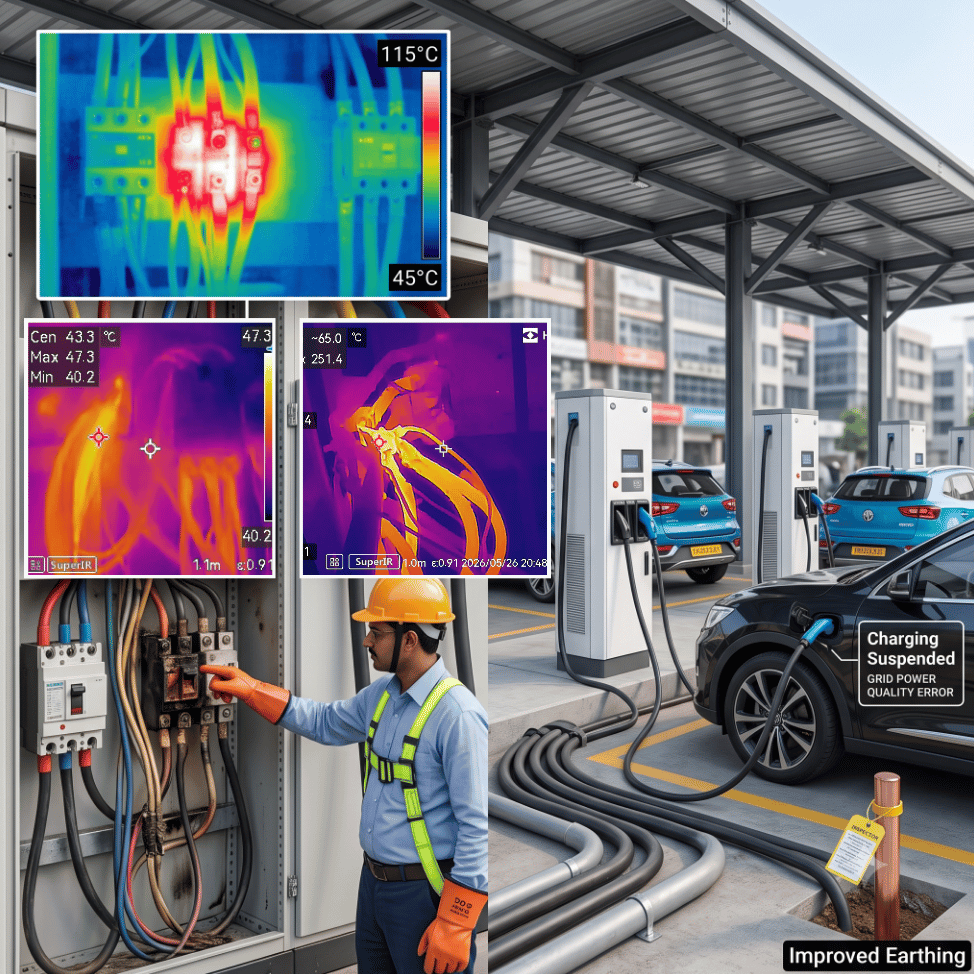
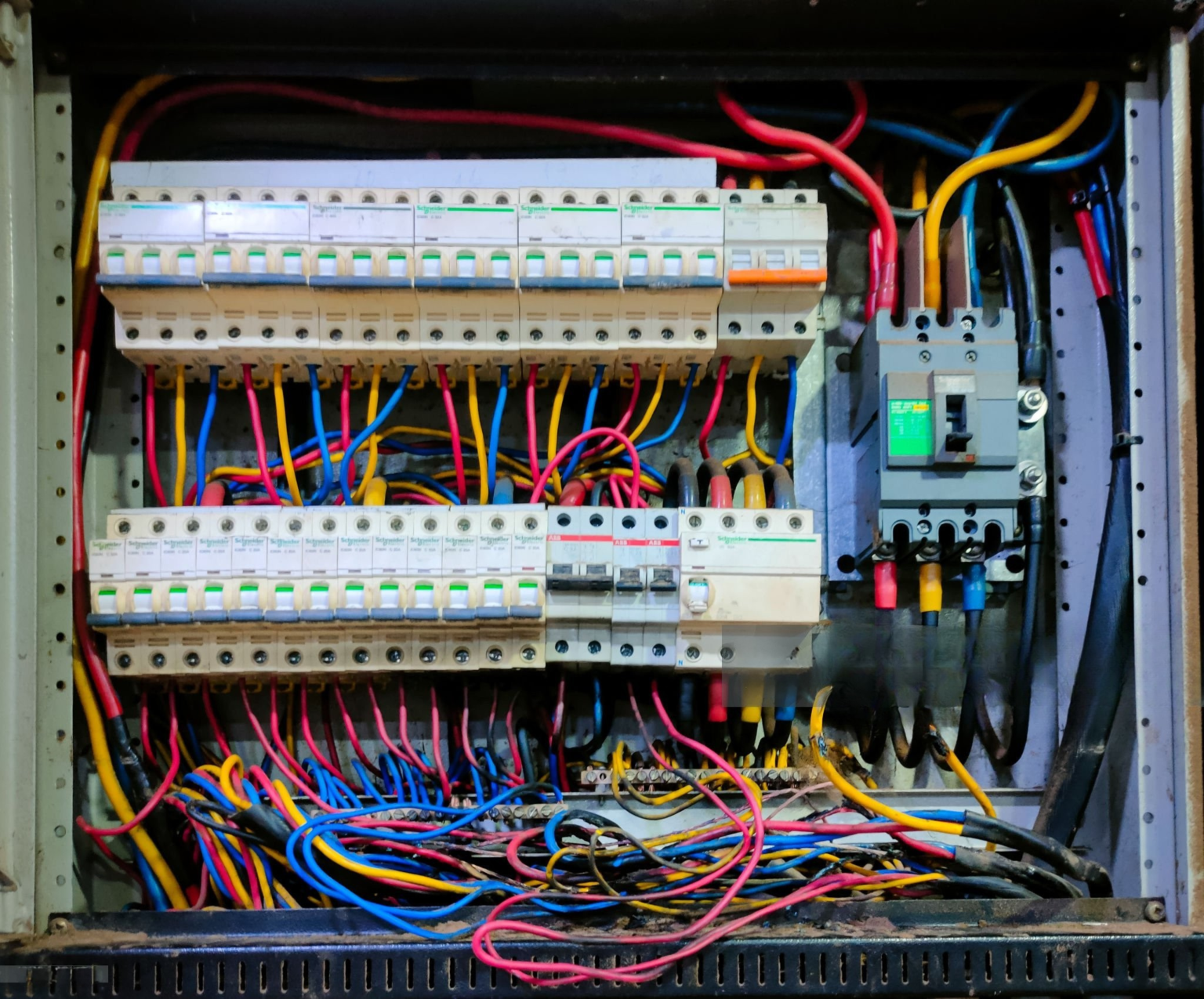
In many cases, the charger itself isn’t the root cause. Electrical issues such as voltage fluctuations, harmonics, unbalanced loads, loose connections, overloaded circuits and poor earthing can significantly impact charger performance and reliability. Environmental factors like high ambient temperatures, dust and moisture further increase stress on electrical components, accelerating wear and increasing the risk of failure.
The good news? Most of these problems can be identified before they lead to costly downtime.
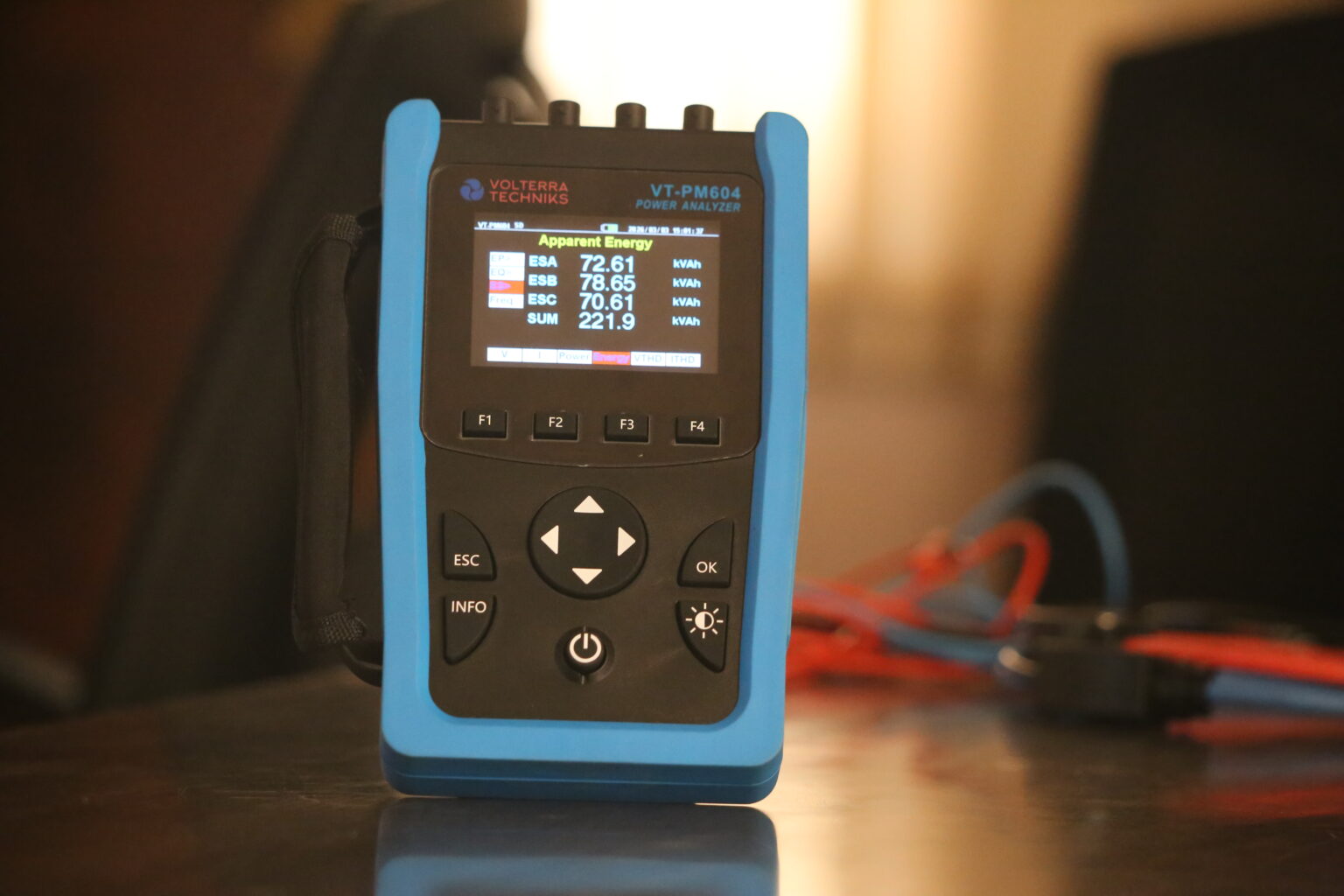
A Power Quality Analyzer helps engineers monitor voltage stability, harmonics, load imbalance, and power factor to ensure chargers receive a healthy and stable power supply. To better understand how these parameters directly impact EV charger performance in real-world conditions, we’ve demonstrated a complete EV charger testing procedure using a Power Quality Analyzer in the video below. This walkthrough shows how electrical disturbances are identified, measured, and interpreted to diagnose hidden issues that can lead to charger failures, inefficiency, or unexpected downtime. A Power Quality Analyzer helps engineers monitor voltage stability, harmonics, load imbalance and power factor to ensure chargers receive a healthy power supply.
At the same time, a Thermal Imager quickly reveals overheating connectors, loose terminals, overloaded breakers, and hotspots inside charging panels—issues that are often invisible during routine visual inspections. To see this in action, we’ve included a dedicated video on Thermal Imaging – Real-Time Temperature Monitoring, where you can observe how thermal patterns help detect early-stage electrical faults before they escalate into failures or safety risks.
As EV infrastructure continues to expand, reliability is becoming just as important as installation. Routine electrical testing and thermal inspections not only improve charger uptime but also enhance safety. It also reduce maintenance costs and extend equipment life.
Because building more charging stations is only half the solution but keeping them operating safely and reliably is what truly powers the future of electric mobility.
The Role of Predictive Maintenance in EV Charging Reliability
As EV charging networks scale, reactive maintenance is no longer sufficient. Waiting for a charger to fail before investigating the cause leads to unnecessary downtime, customer dissatisfaction, and higher repair costs. This is where predictive maintenance becomes essential.
By continuously or periodically monitoring electrical parameters such as voltage quality, current imbalance, harmonic distortion, and temperature rise, facility managers can detect early warning signs of failure. Small issues like a slightly loose terminal or minor voltage instability may seem insignificant at first, but over time they can escalate into major breakdowns.
Predictive maintenance allows engineers to act before failure occurs—ensuring that EV chargers remain operational, safe, and efficient even under heavy usage conditions.
From testing solar inverters and motors to performing energy audits and harmonic analysis, power analyzers are widely used across industries that depend on stable and…
A power analyzer is an essential instrument for measuring electrical power, energy efficiency, harmonics, and power quality in modern industrial systems. This guide explains how…
Electric vehicles rely on efficient power conversion between batteries, inverters, motors, and charging systems. A power analyzer plays a critical role in EV testing by…
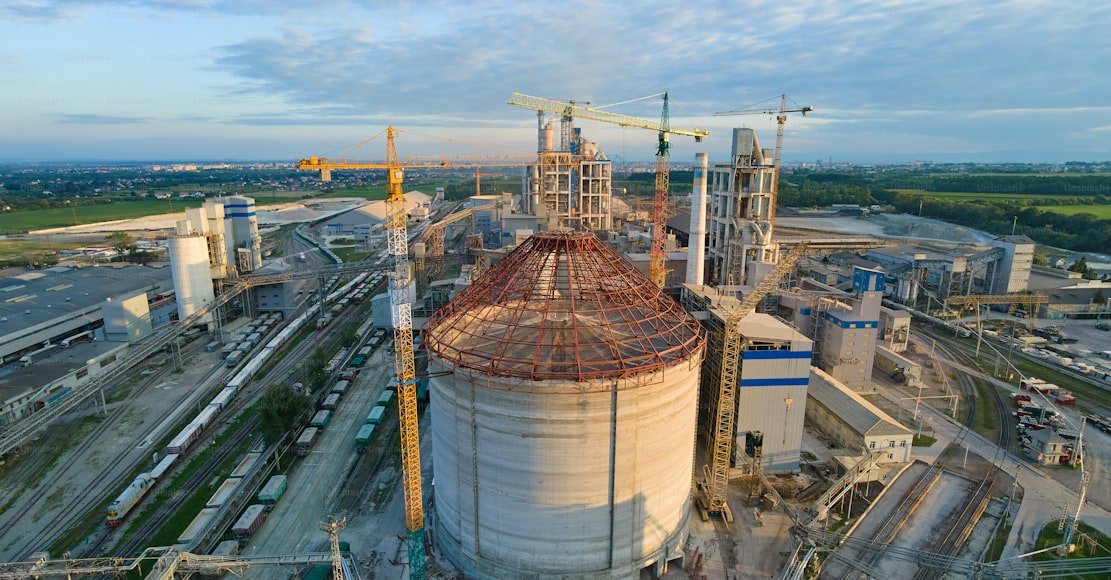
Discover how advanced power quality analysis and thermal imaging can improve cement plant reliability, identify electrical and mechanical faults, reduce unplanned downtime, and support proactive…
Discover how the VT-PM604 simplifies power quality monitoring in live electrical systems using flexible Rogowski current probes. Designed for industrial plants, commercial buildings, EV charging…