How Infrared Thermography Helps Detect Wind Turbine Blade Damage Before It Becomes a Costly Failure
Wind Turbine Blade Damage: A Hidden Threat to Renewable Energy Assets
Wind turbine blades operate under constant mechanical stress and harsh environmental conditions. Over time, factors such as manufacturing defects, lightning strikes, cyclic fatigue, UV exposure and moisture ingress can cause internal damage that remains invisible during routine visual inspections.
If these defects go unnoticed, they can develop into blade delamination, erosion, or structural failure—leading to unplanned downtime, expensive repairs, reduced power generation and potential safety risks. This blog explains how infrared thermography detects hidden defects such as delamination, moisture ingress, cracks, and erosion, enabling predictive maintenance and reducing costly downtime. Discover why thermal inspections are becoming an essential part of modern wind farm maintenance and asset management.
Why Early Detection Makes All the Difference
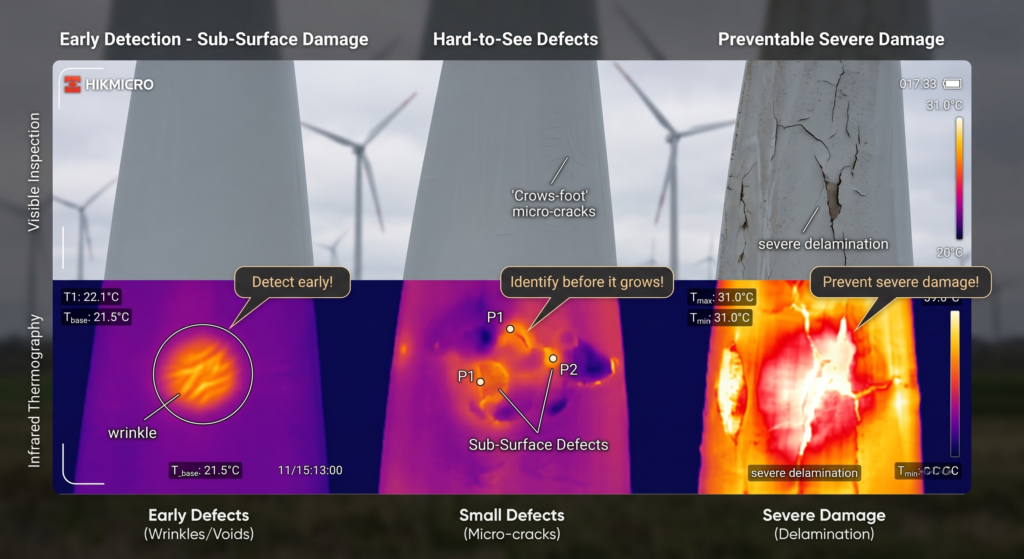
Once internal blade damage begins, it can progress rapidly often reaching a critical stage within 6 to 18 months, depending on blade condition, wind loading, environmental exposure and operating stress.
Infrared thermography detects abnormal temperature variations caused by internal defects before they become visible. These thermal patterns allow maintenance teams to identify developing problems early and schedule repairs before failures occur.
Early detection enables operators to :
– Perform localized blade repairs
– Schedule maintenance during planned shutdowns
– Reduce mechanical stress through temporary operational adjustments
– Increase monitoring frequency for critical assets
The ROI of Preventive Thermal Inspections
Replacing a damaged wind turbine blade can cost well into six figures, excluding lost revenue from downtime. In comparison, repairing a defect discovered during an early inspection is considerably less expensive. By identifying problems before they escalate, thermal inspections help operators to :-
Reduce Emergency
Repair Costs
Minimize Production Losses
Extend Blade Service Life
Improve Maintenance Planning
Increase Overall Asset Reliability
Why Thermal Imaging Outperforms Conventional Inspection Methods
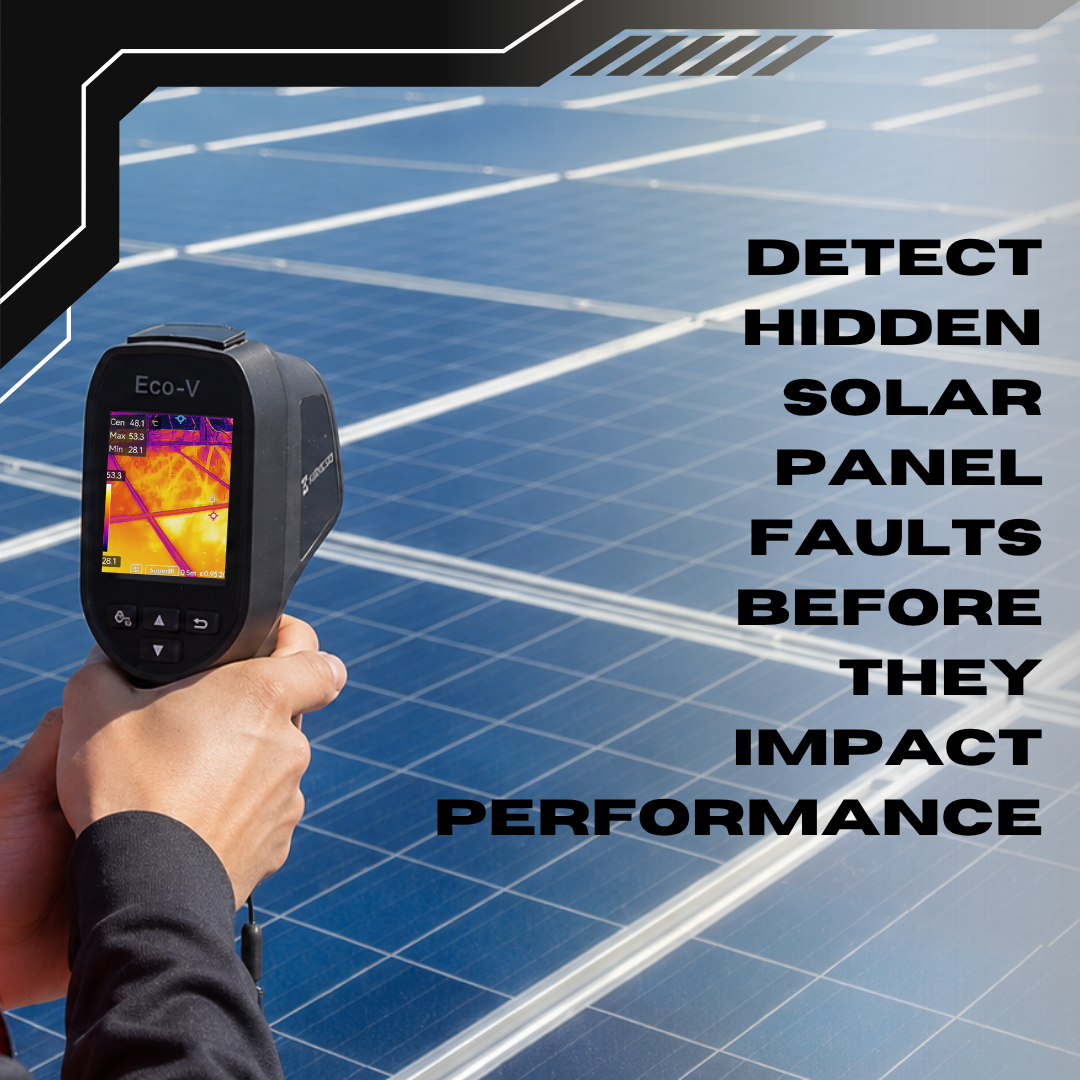
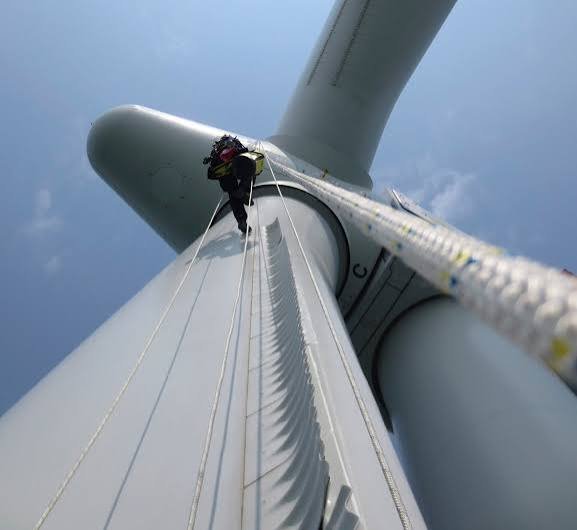
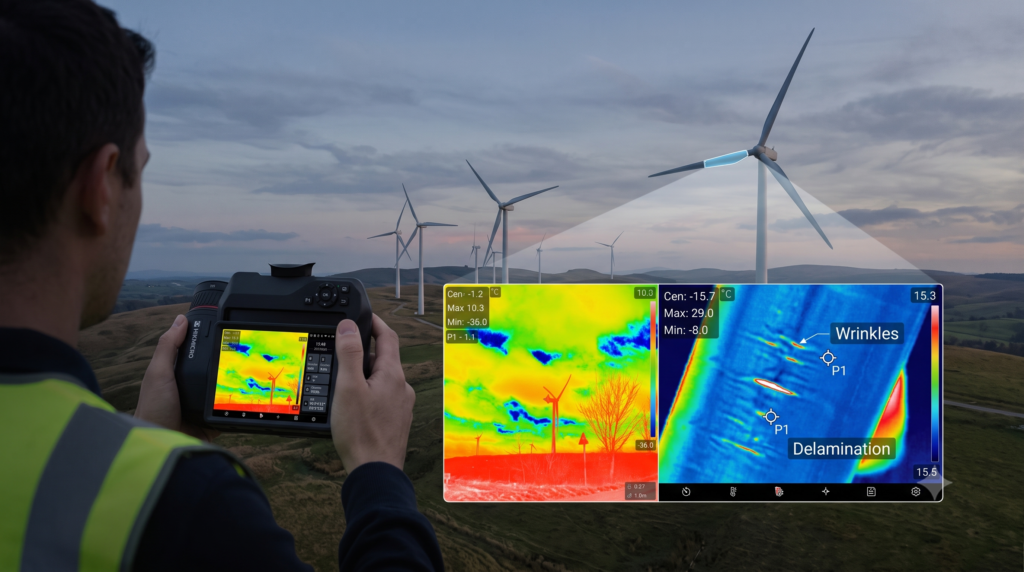
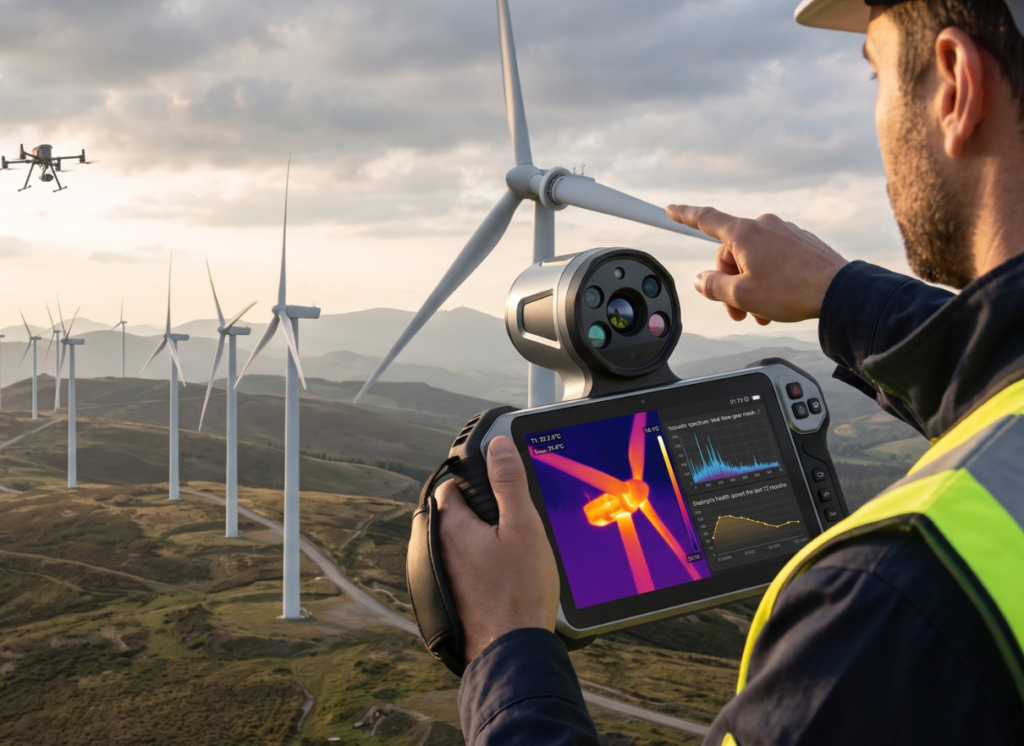
Infrared thermography is a non-contact, non-destructive inspection technique used to assess the condition of wind turbine blades, one of the most critical and expensive components of a wind turbine. During an inspection, a thermal imaging camera scans the entire blade surface. Typically from the root section near the hub to the blade tip—either from the ground, inside the blade during maintenance or using rope-access technicians or inspection platforms. The camera records temperature variations across the blade’s composite material, revealing hidden defects that are often invisible to the naked eye.
Wind turbine blades are manufactured using multiple layers of fiberglass, carbon fiber, resin, and adhesive bonds. When these internal layers begin to separate due to delamination, poor bonding, fatigue loading, moisture ingress, lightning strikes, manufacturing defects, or leading-edge erosion, they create changes in heat transfer within the blade. During operation or after exposure to sunlight, these damaged areas heat up or cool down differently than the surrounding material, producing distinct thermal patterns that are captured by the thermal camera.
By analyzing these thermal anomalies, maintenance teams can identify internal delamination, debonding between composite layers, trapped moisture, voids, cracks, adhesive failures, impact damage and erosion beneath the blade surface long before visible signs appear. Detecting these issues at an early stage enables operators to plan localized repairs during scheduled maintenance rather than waiting for defects to develop into major structural failures.
Regular thermographic inspections not only improve blade reliability but also support predictive maintenance strategies, helping wind farm operators reduce downtime, extend blade service life, lower maintenance costs and maximize long-term energy generation.
Building a Smarter Predictive Maintenance Strategy
Modern wind farms are increasingly shifting from reactive maintenance to predictive asset management. As wind energy continues to expand globally, adopting advanced inspection techniques is becoming essential for protecting critical assets and ensuring uninterrupted renewable power generation.
Beyond reducing maintenance costs, proactive thermal inspections contribute to:
find the best product for your application
To Know More
About our thermal imaging tools, click the link below